Skip to content
Let's talk

REALM

Automate the search. Focus the investigation.

REALM is RF anomaly detection that learns the RF environment around the clock and surfaces what changed: live, or across the recordings you already have.

In operational use

The modern RF environment

Crowded. Complex. Constantly changing.

Radar, telemetry, navigation, data links and countless connected devices share the same spectrum. That creates a different challenge for every mission.

  1. 01Facility security

    A brief transmission.

    A short, low-power emission inside a secure facility.

  2. 02Signal development

    Uncatalogued emitters.

    An unfamiliar area, with emitters no one has catalogued.

  3. 03Retrospective analysis

    Unreviewed recordings.

    Weeks of recordings that no one has reviewed.

  4. 04Blue force communications

    Your own RF signature.

    The RF signature your own communications leave behind.

Different missions. One question.

How do you know what matters?

Current approaches

What current tools miss.

  • Threshold alerting

    Flags power crossings. A low-power emitter under the line never trips it.

  • Signature matching

    Recognizes only known protocols and signatures. Anything off-spec is ignored.

  • REALM

    Asks a different question. Not “is this on the list?” but “does this belong here?”

The REALM approach

What’s normal here? What has changed?

The hardest signal to find may be the one you didn’t know to look for. REALM needs no signature library. It learns what each sensor normally receives, and surfaces what that baseline can’t explain.

  1. 1

    Learn the environment.

    REALM builds a statistical model of normal for every frequency it watches. Detection starts about a minute into a run, and the model keeps learning.

  2. 2

    Surface the change.

    Activity the model can’t explain is scored, tracked and raised for review. Signals that return or change are raised again.

  3. 3

    Understand the waveform.

    An I/Q (in-phase and quadrature) receiver retunes onto the anomaly on its own. REALM records it, classifies the modulation and hands your team the evidence.

One capability. Two ways to work.

Live monitoring. Retrospective analysis.

Both automate the first pass.

Live monitoring

Watches the spectrum around the clock and flags what changed, as it happens.

  • Continuous, unattended sweep monitoring on every sensor
  • Automatic tip-and-cue I/Q capture of each anomaly
  • A review queue that re-raises signals when they return or change

Less monitoring. More investigating.

REALM Hindsight

Searches the collections you already have for activity that doesn’t fit.

  • Choose a window to investigate and a period to compare it against
  • Reads REALM recordings, SigMF (Signal Metadata Format) and common spectral formats in place
  • Ranks what it finds into tracks for analyst review

More value from every collection.

Capabilities

Built to run unattended.

REALM does the watching, the recording and the first pass of analysis. Your team gets the short list.

  • Continuous monitoring

    Unattended sweep monitoring across every sensor, around the clock. Runs resume on their own after a restart.

  • Self-learning baseline

    Starts detecting in about a minute and keeps refreshing. Freeze it, schedule it, compare it or reuse it.

  • Tip and cue

    Anomalies retune an I/Q receiver automatically for a closer look.

  • Automatic evidence

    Anomaly-triggered sweep and I/Q recording, with retention set by verdict.

  • Modulation recognition

    Classifies waveforms and groups detections into tracks.

  • Protocol compliance

    Known protocols decoded and checked for specification compliance.

  • Review queue

    Bulk verdicts, returning-signal alerts and CSV export of events, tracks and detections.

  • I/Q workbench

    Modulation classification, symbol and chip rate, FM demodulation and direct-sequence spread spectrum (DSSS) detection on any capture.

  • Self-diagnosing nodes

    Health for every subsystem, with the cause and the corrective action for each problem.

  • Runs air-gapped

    Entirely on-premises. Installs offline. No cloud connection required.

Mission areas

REALM knows.

  • New signal discovery

    Surfaces emitters and waveforms that match nothing REALM has seen before.

  • Counter covert communications (COVCOM)

    Finds the brief, low-power and off-spec transmissions that thresholds and protocol lists pass over.

  • Threat indication

    Treats change in the RF environment as an early indicator, and flags it for investigation.

  • Spectrum operations

    Keeps a continuous, recorded picture of spectrum use across sensors and time.

  • Ubiquitous technical surveillance (UTS)

    Shows what your own people, devices and facilities emit.

  • Technical surveillance countermeasures (TSCM)

    Gives sweep teams a learned baseline to compare against, live or after the fact.

  • In-place monitoring systems (IPMS)

    Continuous in-place monitoring that alerts on change, not just on threshold crossings.

Deployment

Built to fit your mission.

EXP recommends the receivers, antennas and compute for each mission, and configures the system end to end.

  • SDR + local GPU compute

    Edge

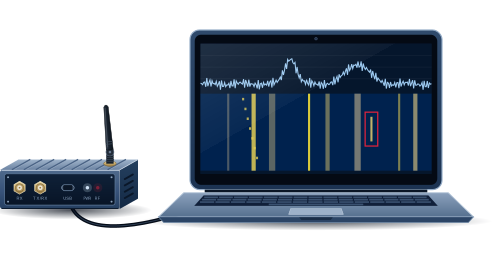
    A self-contained node: receiver, antenna and an NVIDIA GPU host, from a laptop to a DGX Spark-class system.

    Suited toPortable sweeps, temporary sites, forward locations

  • Many sensors, one node

    Centralized

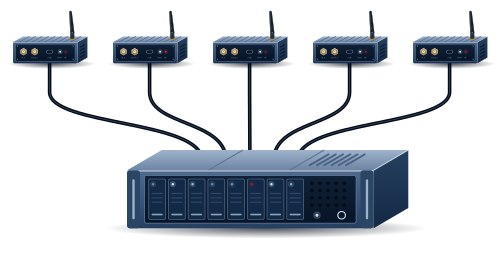
    Several receivers and remote spectral relays feed one node, monitored together as sensor groups.

    Suited toFixed facilities and campuses

  • REALM Hindsight

    Offline analysis

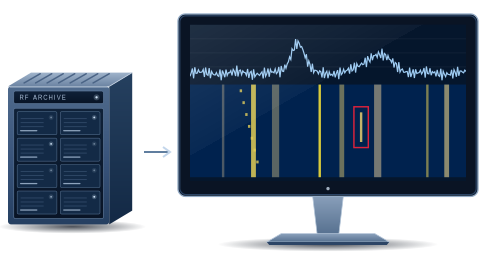
    Retrospective analysis on recordings you already have, read in place on an analyst workstation.

    Suited toAnalysts, archives, post-mission review

  • Engineered to order

    Enterprise

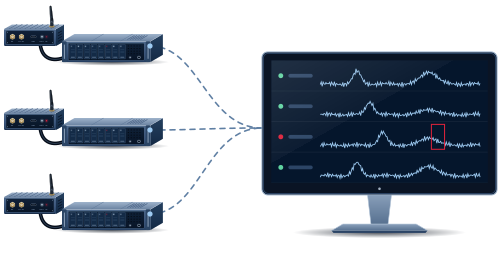
    Many independent nodes, managed together with results centralized for your organization. Scoped with EXP engineering.

    Suited toMulti-site programs

What EXP delivers

  • IntegrationConfigured, installed and verified for your site or mission.
  • Operator trainingHands-on courses for operators and analysts.
  • Ongoing supportUpdates, sustainment and engineering support.

Specifications

Wideband by design.

100 kHz – 44 GHz

Frequency coverage, depending on receiver

REALM specifications
Sweep receiversSignal Hound SM200C, SM435C, SP145
I/Q receiversSignal Hound SM series; Ettus USRP B205mini, B206mini, N320, X300/X310
Instantaneous I/Q bandwidthUp to 200 MHz, depending on receiver
Antenna switchingAutomatic, scheduled by frequency, through the receiver’s switching interface
ComputeNVIDIA Jetson Thor, NVIDIA DGX Spark-class, or a Linux workstation or laptop with an NVIDIA GPU
DeploymentContainerized; offline (air-gapped) installation; fully on-premises
RecordingSweep spectra; I/Q as 16-bit complex with SigMF metadata
InterfacesREST API; live detection and event streams
DataEvents, tracks and detections in an on-node database; CSV export; recordings manifest
Retrospective inputsREALM recordings, SigMF and common spectral formats

The film

REALM in three minutes.

One spectrum, many missions. Here is how REALM finds what matters, live and in the archive.

Questions

Common questions.

Does REALM need a signature library?

No. It learns each sensor’s normal environment and flags departures from it, whether or not the signal matches anything known.

How soon does it start detecting?

About a minute after a run starts. The baseline keeps learning from there. For a fixed reference model, 24 hours is recommended so every hour of the day is covered.

Does REALM decide what is a threat?

REALM detects, tracks, records and characterizes on its own. Your team gives the verdict, and REALM remembers it: a dismissed signal stays quiet unless it returns changed.

Can it analyze recordings we already have?

Yes. REALM Hindsight reads REALM recordings, SigMF, and common spectral formats in place, and ranks what it finds into tracks for analyst review.

Which radios does it support?

Sweep receivers: Signal Hound SM200C, SM435C, and SP145. I/Q receivers: Signal Hound SM series and Ettus USRP B205mini, B206mini, N320, X300, and X310. Coverage runs from 100 kHz to 44 GHz, depending on receiver.

Does it need a network or the cloud?

No. REALM runs entirely on-premises, installs offline, and needs no cloud connection.

Can it feed our other systems?

Yes. REALM offers a REST API and live detection and event streams, and it exports events, tracks, and detections as CSV.

How is it delivered?

REALM is containerized and runs fully on-premises, as an Edge node, a Centralized system, offline Hindsight analysis, or an Enterprise deployment. EXP recommends the receivers, antennas, and compute for each mission, then provides integration, operator training, and ongoing support.

What is RF anomaly detection?

RF anomaly detection finds emissions that don’t fit the normal radio-frequency environment, without needing a list of known signals. REALM learns what each sensor normally receives and surfaces what that baseline can’t explain.

What is TSCM, and how does REALM help?

Technical surveillance countermeasures (TSCM) are sweeps for covert listening and transmitting devices. REALM gives sweep teams a learned baseline to compare against, live or after the fact.

What frequency range does REALM cover?

100 kHz to 44 GHz, depending on the receiver, with up to 200 MHz of instantaneous I/Q bandwidth.

Request a briefing

Find the signals you didn’t know to look for.

Tell us about your mission and we’ll brief your team on REALM. Live demonstrations available.