Expedition is Built to Deploy
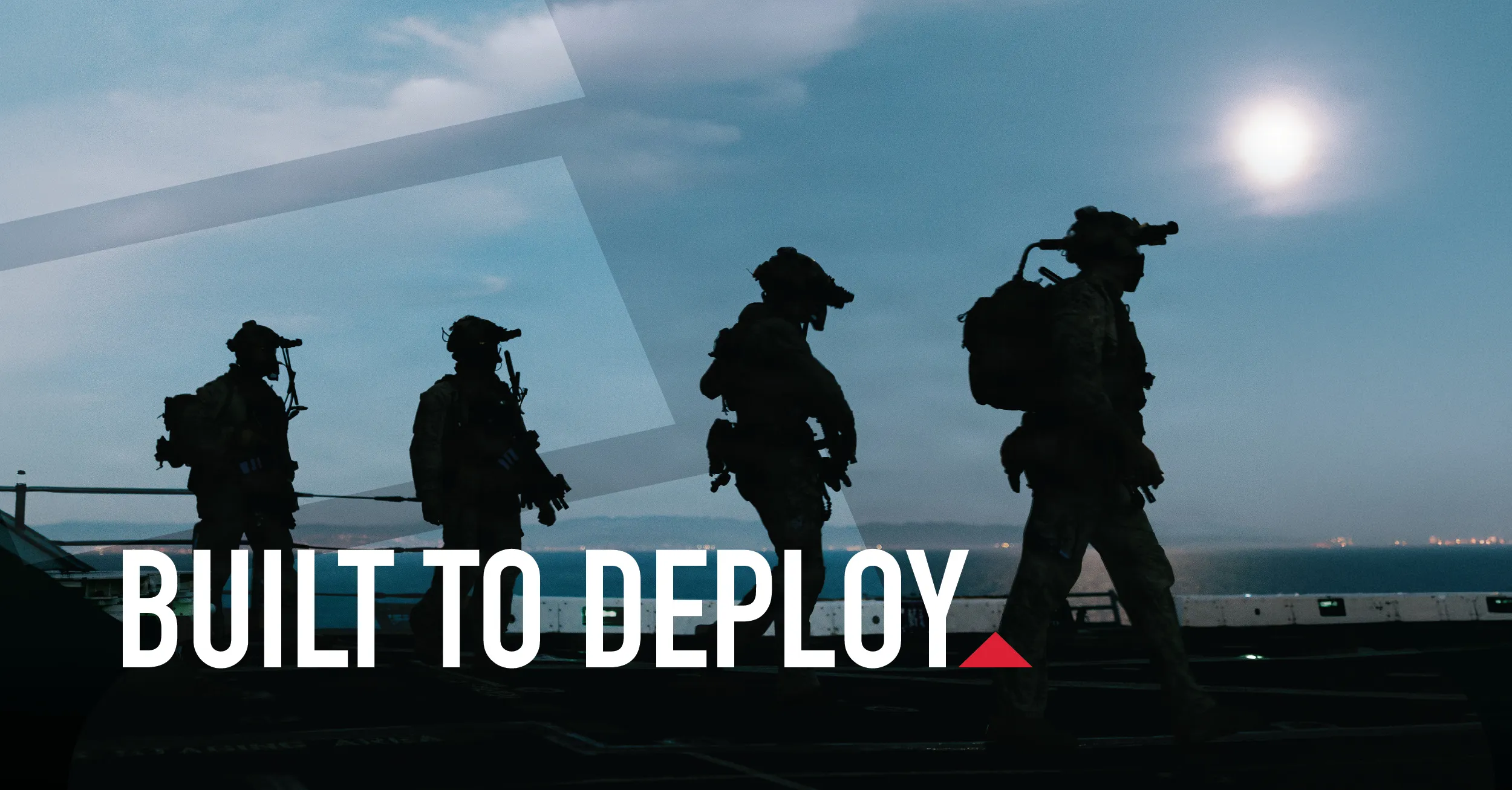
When I founded Expedition Technology with three colleagues in 2013, there were two non-negotiable goals. First, to create a place where I am genuinely excited to come to work every day. Second, to build the company that turns research into operational capability, getting breakthrough technology out of the lab and into the hands of those who need it most.
Anyone who has spent time in the defense and intelligence technology world knows the problem: promising prototypes can’t cross the “valley of death” and transition to operational use. Brilliant people. Rigorous science. Programs that produce novel capabilities. Still, the possible fails to become practical, and those capabilities sit on a shelf while the operational need they were designed to meet keeps growing.
The gap between what the research community can envision and what actually gets deployed to real users in real environments is one of the most persistent and costly failures in national security technology. It’s not a funding problem. It’s not a talent problem. It’s a culture problem.
EXP was designed from day one to close that gap.
We are built differently than most companies in this space. We are not a pure research shop; we don’t measure success in papers published or prototypes demonstrated. Nor are we a systems integrator; we do not simply assemble and deliver what others have built. We occupy a specific and essential middle ground: technically deep enough to take on the hard AI and machine learning problems that others avoid, and operationally serious enough to see those solutions through to deployment in contested, real-world environments.
That discipline has produced a track record that shows EXP is built to deploy. From our early work on DARPA’s RF Machine Learning Systems program through a portfolio of demanding government research programs (IARPA SCISRS, IARPA HAYSTAC, DARPA NGEST, IARPA Video LINCS) we have consistently done the hard R&D. But more importantly, we have consistently taken the next step. We have transitioned AI capabilities from research programs into operational prototypes and products across RF spectrum awareness, GPS authentication, computer vision, and autonomous signal characterization — delivering measurable performance improvements for the U.S. Navy, U.S. Army, and multiple intelligence agencies.
We have also built infrastructure to extend that impact beyond our own programs. Our Training Data Storefront gives hundreds of government and contractor algorithm developers across more than a dozen regional agencies streamlined access to the multi-domain data they need to move faster. GANNDALF, our automated neural network development framework, puts AI applied to RF spectrum awareness within reach of non-expert developers who would otherwise face years of barrier-to-entry. These are not internal tools. They are ecosystem plays, built because we believe the mission is bigger than any single program.
The company we have built reflects those beliefs. We have grown an average of 25 to 30 percent annually for eight consecutive years. We recently welcomed our first institutional investors, Razor’s Edge and Enlightenment Capital, who share our conviction that this is the right moment to accelerate. We are on our fourth facility expansion to support classified AI development, and we continue to attract and develop some of the most technically capable cleared talent in the country.
What hasn’t changed is the reason we exist: to take the hard problems, do the real science, and then see the work through to operational impact, because that last mile is where it matters, and it’s where most organizations stop.
If you lead a company doing serious AI work in this space and you’re asking whether there’s a partner, a platform, or a path that could help you get your own work further faster, I’d like to have that conversation. EXP is growing, and we are looking for organizations that share our standards and our sense of mission.
We built this place to last, to matter, and to deploy. There’s room for more on the expedition.